In April 2025, Nomura announced its acquisiton of Macquarie's American and European public asset management business. It is an all cash deal of $1.8B. So, what does this have to do with rising Japanese inflation?
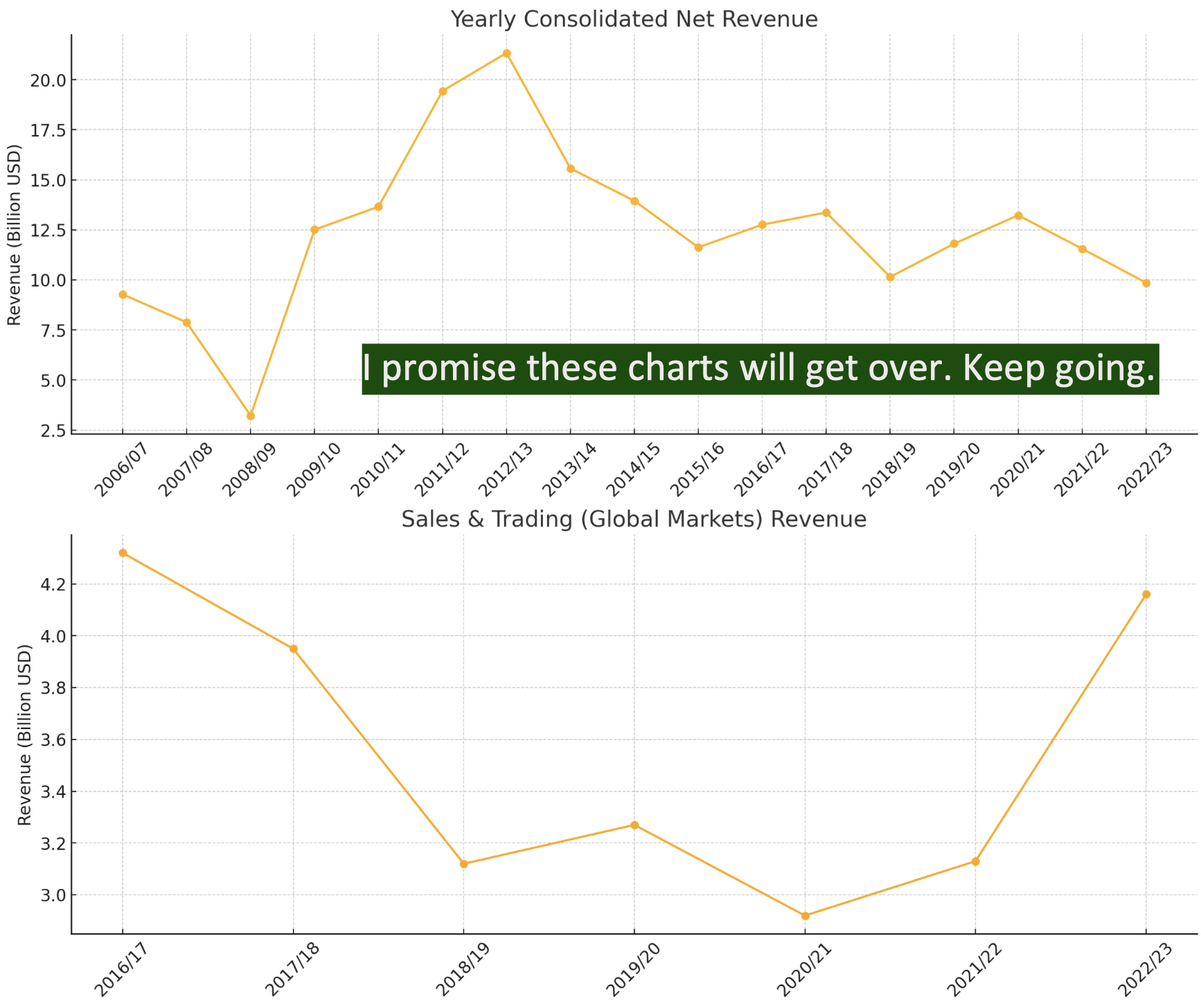
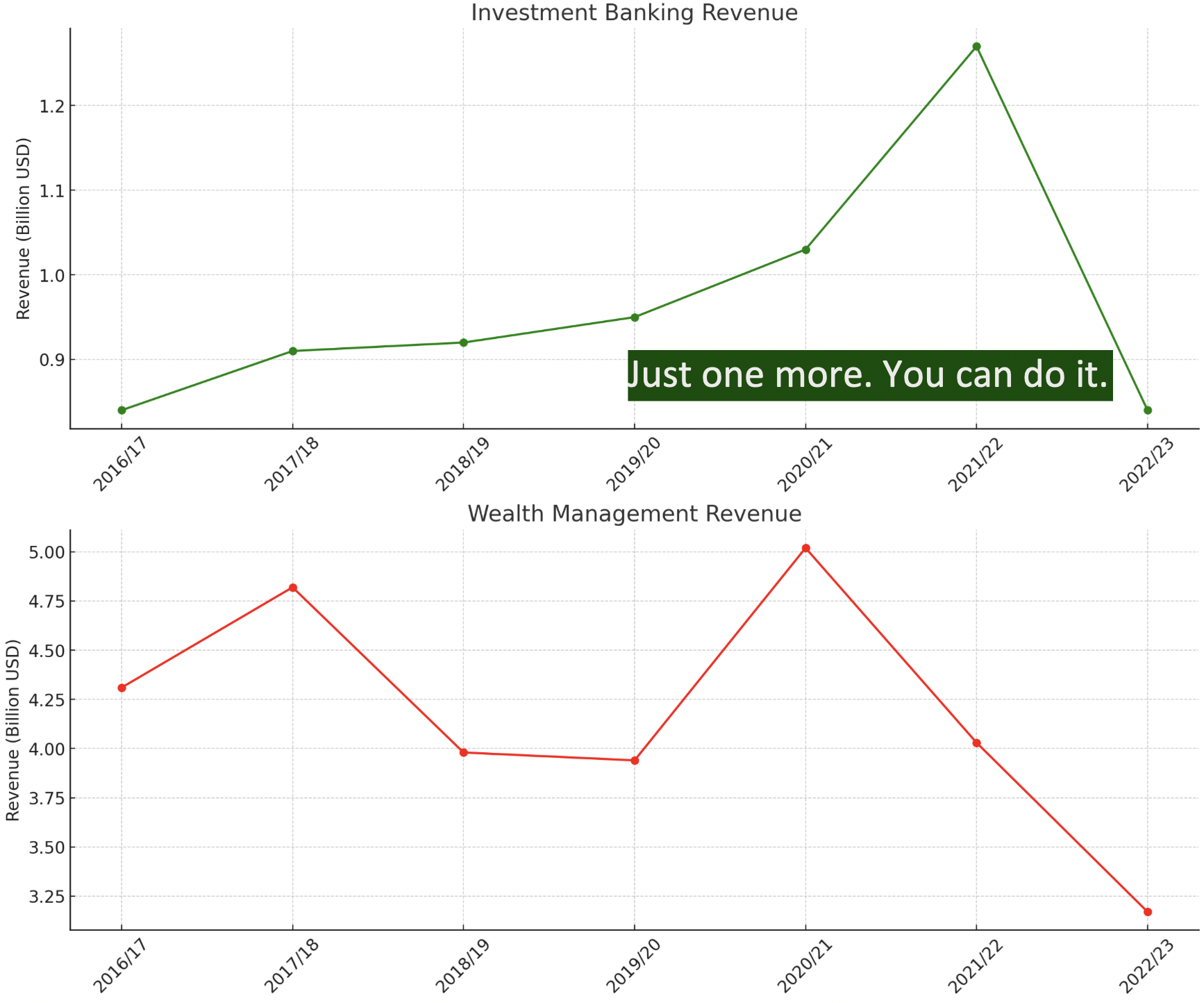
For starters, we need to understand what makes a good investment banking business. Firstly, you need sales and trading (S&T), which performs well during highly volatile periods as market makers and traders are able to capture larger moves and charge higher commissions. Secondly, you need investment banking division (IBD), which heats up during calmer periods. But, to really make it an all-weather business. You need secret ingredient of wealth management, which provides consistent revenue in the form of asset management fees. This wealth management division provides necessary cushion and income to sustain lean patches and increases financial stability of a financial firm.

As illustrated below, there is inverse cyclicality in S&T and IBD businesses.
More about the transaction:
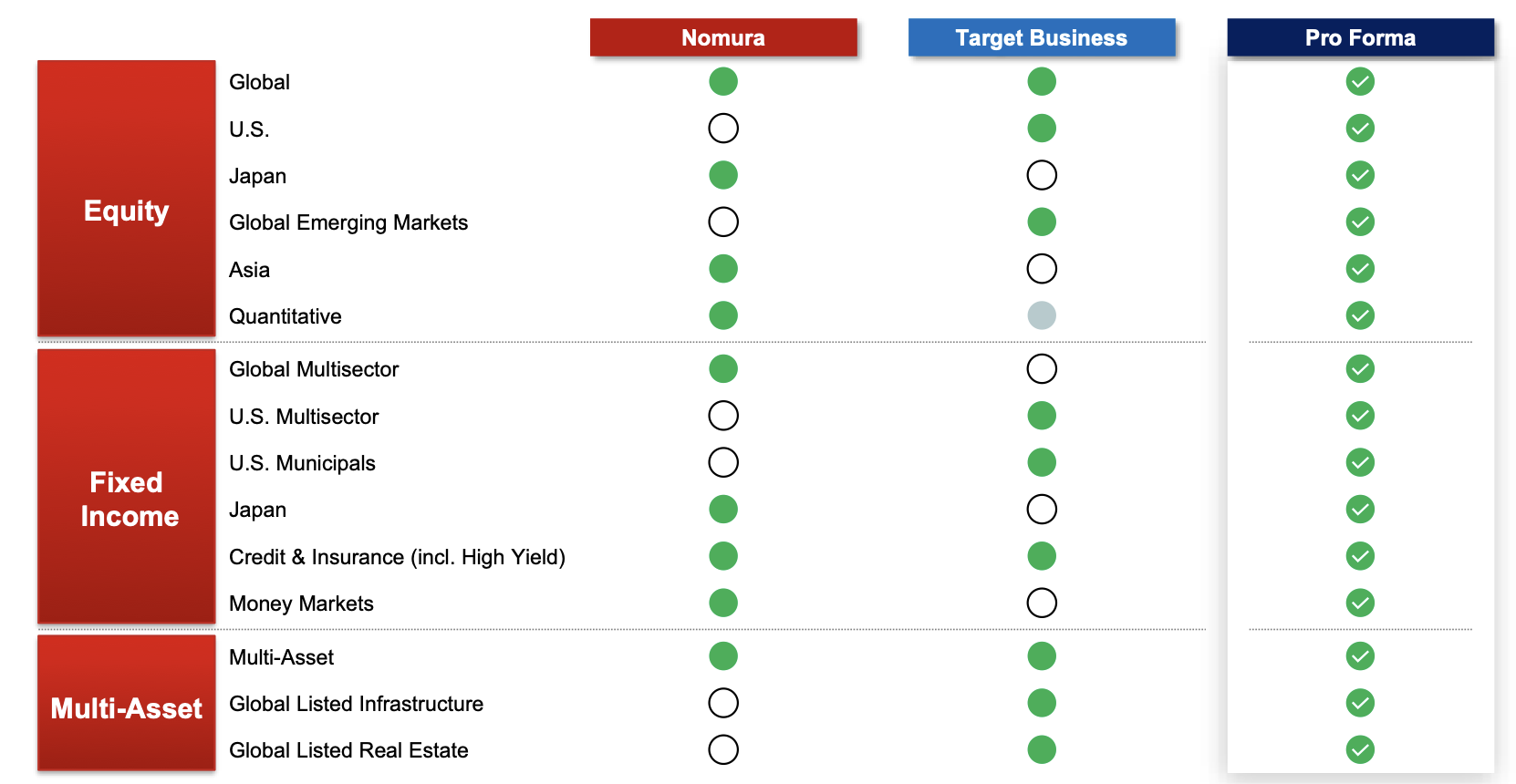
Nomura is the leading asset manager in Japan with $590B AUM and is set to add $180B AUM through Macquarie assets acquisition. This sets to put Japan's contribution to AUM from 84% to 65%.
This acquisition will also enable them to operate gamut of complementary investment strategies.
Again, what does this have to do with rising Japanese inflation?
Well, the answer lies in Japan's current savings structure. Due low inflation and deflation, Japanese people have had a preference for saving in cash and deposits since it is the safest and non-eroding form of saving. The wedge is so large that cash and deposits account 50%+ of country's saving. And mutual funds, just 4.5%. And, due to low inflation, it made sense as well. But, with rising inflation Japanese people are realizing the need to save in mutual funds, be it debt or equity. This is essentially well-timed play from Nomura to capture the incoming wave of investments while also increasing the global footprints and investment capabilities.
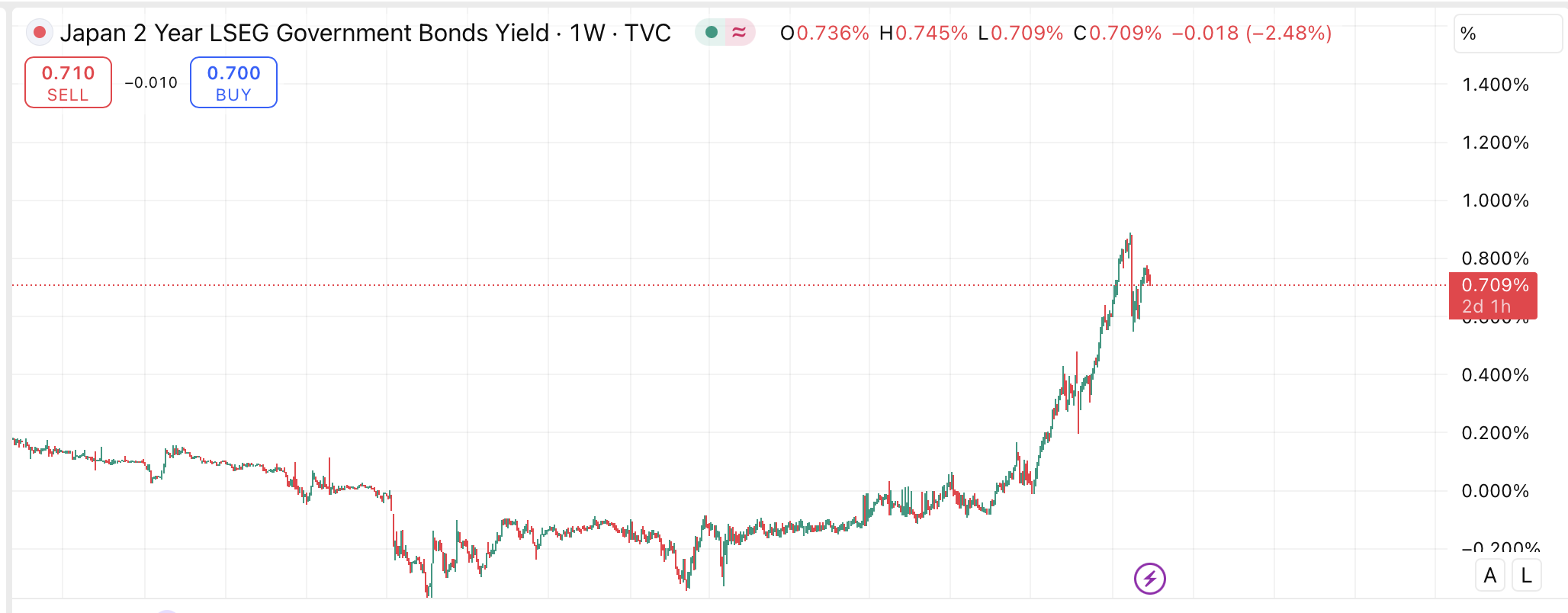
Japan's 2Y Yield which is reflective of inflation expectation by Japanese Central Bank.